If AUTO wiping is unsuitable, use the manual wiping mode needed to keep a clear view. A UK G6 owner reported automatic wiping reacting to sunlight. That report identifies a useful comparison; it does not prove that every G6 has the same sensor fault.
This answer uses the earlier UK G6 handbook supplied by XPENG in June 2025, printed page 225 (PDF226). A revised 2026 car or another XOS build needs its own matching controls. The separate blade/service-position guide remains the place for replacement procedures.
1. AUTO reacts when it is dry, or does not suit the rain. What can I change?
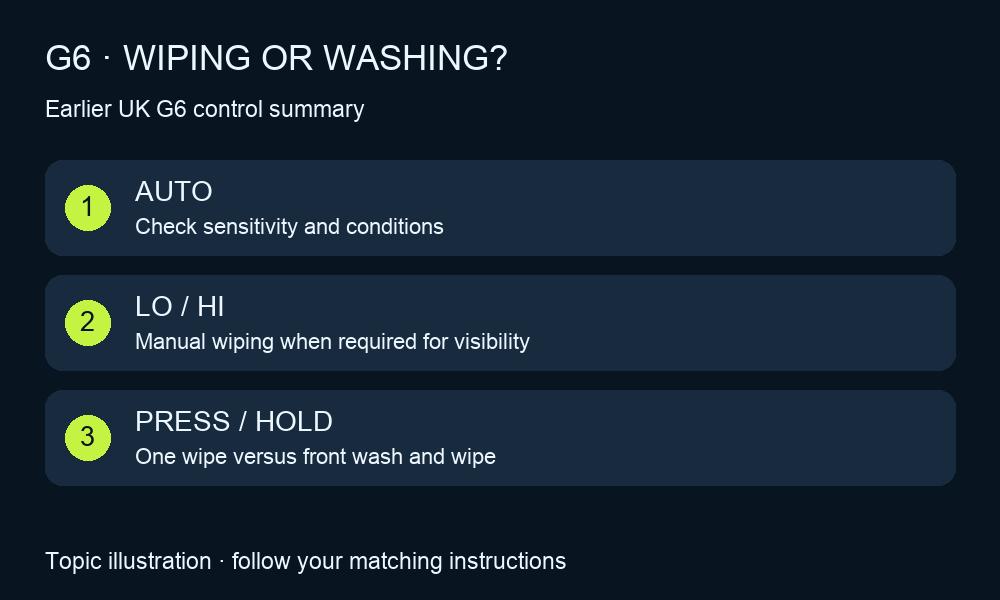
While parked, identify the front-wiper switch state. The checked handbook distinguishes OFF, AUTO, LO and HI; AUTO responds to rainfall, whereas LO/HI are manual speed selections. It places automatic-wiper sensitivity under the central display’s settings → Window & Door. Note the current selection and change one sensitivity setting, rather than changing several unrelated automations.
In suitable wet conditions, compare AUTO with the appropriate manual mode. If the blades work normally manually but AUTO behaves poorly, report the automatic-control symptom. If all modes fail, a sensitivity change is not a motor repair. Stop safely if you cannot maintain visibility; do not keep running the blades on dry or frozen glass.
Once parked, inspect for obvious dirt or obstruction on the glass using the documented cleaning method. Do not remove the sensor cover or add coatings as an experiment. Record whether it occurs in sunlight, rain or after glass work, and preserve the XOS build. Ask support to check the rain-sensor input and configuration for the exact car if the distinction persists.
2. Pressing the washer button wipes once but gives no water. Is it broken?
The same handbook distinguishes press and release for a single wipe from press and hold for front washing and wiping. Check that distinction while parked with fluid available and the glass/blades free of ice. Use the labelled washer control, not the rear-wiper selection.
If a hold produces normal spray, the one-wipe result was a control-action distinction. If no fluid appears, stop repeated pumping. Check the washer-fluid level and whether freezing conditions are involved, using the matching handbook; do not poke nozzles, add boiling water or keep running a dry pump. Record front versus rear spray, any pump sound and ambient temperature. Ask for the relevant supply/pump/nozzle check if the documented action still fails.
Next: blade replacement and service position · safe glass and vehicle cleaning.
Official UK G6 handbook: wiper controls · UK-owner automatic-wiper observation in an international discussion. Two practical control questions address that concern; the report is not a verified repair. Checked 18 October 2026.
3. How do I cancel the G6 rear wiper?
The checked UK handbook distinguishes two rear-switch actions. Moving the rear-wiper switch up toggles rear wiping on or off. Moving it down and releasing gives a single wipe; moving it down and holding operates the rear washer and wiper. Use the rear control identified in your exact handbook, rather than repeated front-washer presses or guessed double taps.
After rear washing, that edition describes three further wipes and one more after about ten seconds. Those finishing sweeps are different from indefinite wiping. Once safely parked, check the switch action once and allow the documented finishing sequence before concluding it has not stopped. Do not run the wiper against ice or keep washing dry glass.
If wiping continues beyond that sequence after the normal off action, keep people clear, record the switch action, whether washing was used, vehicle/lock state and full XOS build, and request a rear-switch/washer-command and wiper-control check. A UK owner reported stopping continued wiping after disconnecting Bluetooth; that is an individual observation, not a verified reset or evidence that deleting phone keys will repair the fault. Do not disconnect the vehicle battery or dismantle the wiper to experiment.
This additional question came from UK owner-group research; posts and identities are not reproduced. The operating sequence is from the same official UK handbook, printed225/PDF226.
PRACTICAL NEXT STEP · MyXPENG
Test the behaviour. Keep the evidence.
Applies to: Earlier UK G6 handbook supplied June2025, printed225 / PDF226; later G6 and XOS controls require matching instructions.
Evidence checked · Review due
Review is due. Recheck the primary source and your exact version before relying on changing details.
First useful check
While parked distinguish AUTO/manual front wiping, single-press versus held front washing, and the rear switch up-toggle versus down single-wipe/wash actions.
Read the result
Manual/AUTO differences identify a control branch; rear washing has finishing sweeps, while indefinite wiping after the off action needs a control check.
Stop or change approach: Stop safely if visibility is inadequate. Do not run frozen/dry blades, repeatedly pump without fluid or remove sensor trim.
Prepare a useful record
G6 generation/build, front/rear switch action, sensitivity, rain/sunlight, wash use, timing of finishing sweeps and lock state if rear wiping persists.
Keep registration, VIN, account numbers and personal addresses out of this note. Nothing typed here is sent to us or saved automatically. Copy it before leaving the page.
Evidence and answer standard
Documented checks and diagnostic distinctions; owner reports identify concerns, not universal repairs. The date records an evidence review, not a physical test of your car. A forum report can identify a question; it cannot establish a universal repair.
How MyXPENG checks owner guidance →Did this guide move you forward?
Count a helpful answer or flag a gap. This is editorial feedback, not a repair diagnosis or a request for a personal reply.
What this sends
Only this guide ID, revision, selected category and vote are counted. No notes, name, search text or IP address are stored in the feedback database. Standard hosting logs still apply. Counts are votes, not unique owners or verified faults.